Friday, August 30, 2013

The musical diet - solo instrumental edition

Repertoire can become a contentious issue among teachers. There are so many things to consider in order to provide appropriate repertoire. If you can hold up repertoire and answer yes to these questions, then your repertoire stands up to the test.

  • Is it at an appropriate level?
Repertoire should be achievable, but should still provide a challenge. If it is pitched too high, a student will soon become frustrated and defeated. If it is too low, the student will be bored.

This becomes awkward for those of us who teach in small groups. The ideal situation is that those groups be as close in level as possible. If this is not the case, here are some strategies for dealing with repertoire:
Add challenges to the existing repertoire. Some students are struggling, but others are sailing through, so add in a new teaching point (perhaps some trills or other ornamentation at cadence points, create more complicated rhythms) or use those composition and harmony skills to create a counterpoint/duet part or an introduction.
Provide a 'challenge for the week'. This is more applicable to younger students who are working from method or repertoire books. If most students are just coping with the assigned work, give out a 'challenge piece', a non-compulsory section of the practice for the week which is pitched well above the current work. (I often don't even give this to the student in question, but the group in general. The students know who the strong one is and do not need it spelled out to them every week.) In this case, depending on the student, it is often okay to provide something pitched much higher than the current work and with concepts they may need to research themselves (a new note, etc).
Provide extra material for the student on a long term basis. This might be a separate piece, it might be a different book entirely. You may choose to hear the student play through it every few weeks (perhaps even during pack up time or before lessons start). It is good to have a knowledge of what is available outside the standard repertoire and books you use just for this purpose.

  • Is is balanced?
I will once again be using a food-related analogy here, since food is one thing that has been drilled into us and we deal with every day. Repertoire, a musical diet, is no different to consuming food. A diet that is nothing but vegetables is bland, boring and uninspiring. It is not healthy because it is not balanced. A musical diet consisting of nothing but scales and exercises does not create musicians. It is no longer art. Similarly, a diet of chocolate and cake is going to render us unwell. A musical diet based entirely around Disney playalongs is not going to create musicians with a consistent degree of technique and cultural understanding.

There is nothing wrong with Disney playalongs at all (I find them quite educational in that the students are excited to play them, and therefore practice them, and they often use techniques that students may otherwise have shied away from). But they need to be presented alongside scales, technique building and repertoire that has artistic merit.

  • Is it educational?
What are the teaching points in the repertoire? Does it have any?

The best teachers can pull concepts from almost any repertoire. In reality, we should be using repertoire which already has these concepts built in. This particularly applies to students still in the early developmental phase of learning their instrument.

Students need relevancy. If you are going to teach them about semiquavers, back it up with repertoire that includes semiquavers. I often find myself bouncing around a book rather than just blindly following it in order as I like to ensure I am following a path of consistent progression and I like to keep all the 'relevant' repertoire together.

Try to extract extra educational points from the repertoire. Give students the task to find out 5 facts about Mozart during the week you are doing Symphony no. 40. Explain why so many pieces are called 'Minuet'. Demonstrate how a sequence works when it appears and why it is helpful to recognise patterns like that.

  • Is it preparing the students for others areas of their musical education?
Students learning in school programs will often be expected to play in band by either their second semester or their second year of learning. For some instruments, this is not an issue - brass, clarinet, saxophone. For instruments in C (flute, oboe, bassoon, double bass), the notes used in a lot of band pieces often do not line up with the typical progression of learning.

There are teachers who insist on sticking to their guns and teaching every student as though they are only ever going to play in lessons. In reality, those students become disadvantaged and frustrated when they can't understand why the band director is picking on them for not knowing the notes. As educators on those instruments, it is important we set the students up for success in whatever environment they find themselves in. If this means creating worksheets and exercises to fill in the gaps that your chosen tutor book doesn't cover, then go for it!

This definitely applies to areas other than band. Your student has been asked to play at their church - do you help them with the music and perhaps give them extra materials to help with any difficult concepts, or do you tell them it's not part of the plan? Some students will always be attracted to performing publicly - make sure they have touched on repertoire that can be used for this purpose. School wants an assembly item? Head off any disasters by making sure students have had a chance to play ensemble music in lessons before you present them with the duet they are going to play in front of the school. Students' instrumental learning needs to be transferrable or it loses relevancy and meaning.

Does your repertoire stand up to the test? Good repertoire is equally as important as good teaching - get the best tools for the job!

Thursday, August 15, 2013

Music in education...why?


On Monday, Australian conductor and music education advocate Richard Gill published this article.

In this current world of standardised tests and, interestingly, what seems like an ever-decreasing amount of desk time for students as the curriculum becomes loaded with 'school responsibilities', why are people such as Richard Gill advocating for mandatory inclusion of music in the school curriculum? There are plenty of reasons (often given by administrators) as to why we shouldn't have music - time, space, funding and specialist teachers are the ones heard most often by those of us in this business.

Music is one of the few subjects which crosses into every learning area.

Music is an art.
This one is a given. It is creative. It demands artistry. It requires a mix of technique and emotion.

Music is a science.
How is sound produced by simply running a bow across a string? What is pitch, and how does a student identify or define it? Without science, and the integration of scientific concepts into the learning of an instrument, there is no music.

Music is a language.
Many musical terms are in Italian. Some are in French or German. The reading of music itself is another language that students must learn in order to engage in music. Whether it is traditional written music, or Kodaly method sol-fa, there is language to learn and apply. Students who don't even speak the same language can communicate through music.

Music is maths.
Music consists of pulse. In pulse, there are divisions. There is also measurement. The rhythm of western music relies on the division and multiplication of basic pulse by two (basic symbols exist for notes with beat lengths of 8, 4, 2, 1, 1/2, 1/4, etc). Students must apply fractions and ratios. Students must understand how tempo relates back to real time.

Music is a social science.
Music is present in every culture. And culture is present in music. Students studying music history will learn about some of the great composers and works that were linked with major world events. Cultures have distinctive musical styles which students learn to associate. Ethnomusicology is becoming a large branch of Western musical understanding, and is finding its way into classrooms.

Music is technology.
If there was ever an area of study that was evolving as fast as technology could keep up with it, music would be it. Music students are using smartphone apps in their practice and lessons (tuners and metronomes) and software in their classes (notation, sequencing, editing). They are downloading, recording, streaming and creating music. Music and technology are like peas in a pod, and the two help students link what they consider 'relevant' to their studies. It enables them to stay engaged as it builds on what they know and understand.

Music is a sport.
There is a physical-ness to making music. Singing and playing wind instruments requires good breath control and capacity. Some instruments are kinetically demanding, such as bowed strings and percussion. There is motion in all of music. Playing an instrument requires high degrees of coordination and fine-motor skills.

A subject that crosses this many learning areas must surely make for a balanced curriculum. It is a way of validating those learning areas which are often kept so cleanly in their pigeon holes by showing students that they have real world applications.

Aside from providing a balance and spread to the curriculum, we must make mention of the other important life skills that music provides. It encourages teamwork. Students must work together to stay in tune and in time. There is often no 'leader' and no one person should 'stick out' all of the time. Students must be relied on to pull their weight and not let the team down. At the same time, there can be opportunities for leadership and mentorship. Music is one of the few areas in school where students from multiple year groups work together. Students learn to work with others older and younger than them, and adjust accordingly. Responsibility is another valuable skill - being responsible for your team, for your instrument and music, for your schedule and for your own learning.

Music not only provides a balance to the curriculum, it provides support. In this academic-focused era that we are in, should we not invest in something that has been proved many times to improve student learning and results? The so-called Mozart effect is real. In addition to the research, enough evidence lies with the musical prowess of the schools with renowned academic results. If you look at the schools with the highest-level ensembles in any school band, orchestra or choir festival, then compare it with a list of the top performing schools in leaving exams, there will be a correlation. While it might be thought of as a chicken-and-egg scenario, there is no denying that the link exists.

Consider the investment in your child's music education. If your school does not have a music program, ask why not. If your school does have a music program, encourage your child's participation and support wherever possible.

I will leave you with this little gem that has been floating around social media:

Friday, August 9, 2013

Scales are like vegetables...

...you might not like them, but they're good for you.

Anyone who has ever been a student of mine will have heard me utter this every time I sense a complaint about scales is about to occur. Younger students often don't understand why we do scales, but have often had the vegetable rule drilled into them from a young age!

Scales (and other technical work) are necessary for development and progression. Teachers don't just make students do them because they are mean and because they had to do them when they were that age. We do scales because:
  • Lots of music contains fragments of scales and other technical passages
  • Scales help cement certain finger and/or embouchure changes (i.e. you don't have to wait until a hard fingering passage turns up in a piece of music and THEN have to worry about how to do it, because you've already worked it out!)
  • Scales are good for warming up fingers, mouth, air and brain before we play music
  • Scales are a good way of learning and using new notes as soon as we learn them
Most students will take this with a grain of salt. Even if the idea of scales 'makes sense', there is still the perception that 'scales are boring'.

If you have to eat vegetables, you want them to be in the tastiest form with the most variety possible, right?

If you are stuck in the 'scales are boring' mindset, try these tricks:
  • Write all the scales you know (or need to know) on small pieces of paper. Do the same with the rhythms/speeds/articulations you are playing, but keep them separate. Draw one from each pile - this will match up a random scale with a random style and keep each scale fresh and interesting.
  • Still on rhythm - find an interesting rhythm in one of your pieces (or invent one) and play all your scales in this rhythm. Not only does it become a new challenge all by itself, it is MUCH more exciting than straight quavers.
  • If you ever have chance to warm up with others (in group lessons, mass warm-up sessions, etc), play scales in rounds. Leave a two-note gap between players. The harmonies it creates are glorious!
  • Play all of your scales from the top downwards, then back up. This is surprisingly harder than it sounds, and is more often than not the cure for those who can play scales brilliantly on the way up but fumble on the way down (believe it or not, this is extremely common).
  • Speed challenge - think of this like a scale version of the beep test. There are so many ways of doing this - you could focus on one scale in one session and use your metronome to see how fast you can get, or perhaps take a set of scales at a set speed and advance by 5bpm or so each day.
  • Create melodic patterns with your scales. A common one, using C major as an example, is [C D E F, D E F G, E F G A, etc]. Another is [C D E C, D E F D, E F G E, etc]. Not only is this more interesting than simply running up and down aimlessly, but some of these patterns often turn up in pieces, particularly Baroque and Classical music. You can even use the order of the notes in the scale to create random patterns, trying to stay in order at all times.
  • Learn a couple of 'cool' scales such as modes and blues scales to scatter amongst your 'everyday' scales (if these are not already your everyday scales).
We still need to know our scales in their original form for assessments, exams and general knowledge. But these techniques, interspersed with standard scales, not only relieve the boredom that scales can induce, but may also help in the long run.

Happy technique-building!

Saturday, May 25, 2013

Instrumental teachers and their students - a love story

As I prepare to leave the US in less than 5 days, I have had to say good bye to the students I have taught here. It has been much tougher on me than I somehow expected.

I have farewelled hundreds of students in my time, but it is different this time. My students in the past often still live in the area. They graduate or leave for high school, and I am just a part of their journey, a part that just moves through life along with everything else. I still see 'old' students at the shops, attending concerts of younger siblings, on Facebook (once they have graduated high school, of course) and in community ensembles (which is fantastic to see!)

I am leaving the US in this capacity. I don't doubt that I will be back, but it certainly won't be with the same intent. There is a good chance I will never see these students again. I was the one who started them on their musical journey, or was a helping hand when school band got too much, or provided support when they made the decision as an adult to once again learn the instrument they played in school. They aren't leaving or going anywhere, they haven't reached a transitional phase. It's me who is moving on from them, not the other way around, and I come to love my students so strongly that I feel as though I am abandoning them.

Instrumental music tuition is what I do and love, and it creates such a special bond with a student. I have taught in many different arenas and circumstances, and the bond you create with your instrumental teacher is not one you can replicate in any other area. It is not better or worse, it's just different.

I have taught classes of students - I have taught dance (both to dancers and beginner high school students), I have taught class music. I have even taught sport (if you know me, you will know that this is the most hilarious and ironic thing I could have taught. My high school Phys Ed teachers would die of laughter if they knew what my country posting consisted of). You can develop beautiful relationships in these classes - you can encourage teamwork, you observe progression, you watch friendships develop, you gain trust and respect.

What makes instrumental music instruction different?

  • We work one-on-one with a student (or sometimes in small groups). We learn all about that one student, and apply what we know to the context of a lesson. The lesson and the progress is tailored to the student. If the student is having an off day, we can change direction that day and come back the next week refreshed. If there is a concept that is proving more challenging than usual, we can spend more time with it, or come back to it later. Most importantly, when you work one-on-one with a student, you learn the whole student, not just what they are working on.
  • We work in an area that is passionate, creative and cognitive. Music fits into every learning area - it is artistic, linguistic, cultural and scientific. We help students across so many areas, and it isn't uncommon to see changes in other areas of life when music becomes involved. Music is a way of baring the soul. You are learning a new skill that only you have control of, and we love the fact that students can be comfortable enough with us that this can happen.
  • We are a constant in an ever-changing world. In private instruction, we continue to give lessons whether the student is moving from primary to high school, having relationship breakdowns, changing jobs, welcoming a new sibling or moving house. Being a point of stability inspires us to keep our teaching relevant and reliable. It is also wonderful being able to observe the growth of a student through life's challenges as an outsider - as a person and as a musician.

One of the most wonderful parts of the job, for me, is watching a student become as passionate as I am about music. This can take so many forms. One that always stands out is seeing students graduate high school (or start an instrument as an adult), and then play next to you in a community band. Music hasn't necessarily become a career, as it won't for many instrumentalists. But it is a passion that will continue to be explored. At this point, I realise that I have fulfilled my job as a teacher - I have instilled passion in my students.

Monday, May 20, 2013

Oboe reed cases

A shameless plug for my wares...

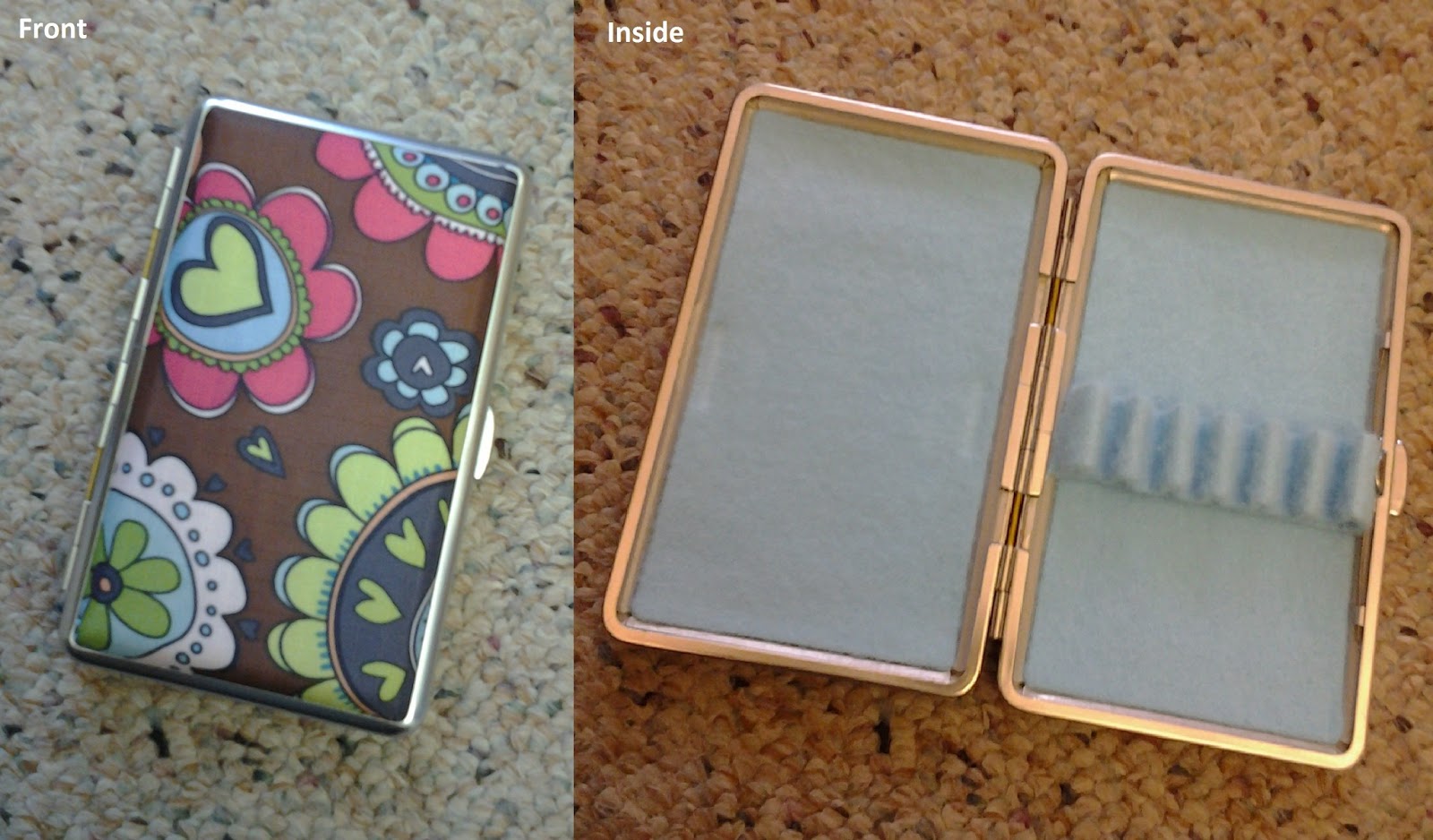
I leave the US in 10 days...and I'd love to sell my current inventory of oboe reed cases before I leave!

I have:

Case for 6 reeds
4 cases for 20 reeds           $35
1 case for 14 reeds            $30
1 case for 6 reeds              $20

I can ship (standard shipping prices will apply) if needed. PayPal available!

Cases for 20 reeds


If you are in Australia, I will have other designs available (and may have some of these left) after June, or I can hold one of these designs for you.


Case for 14 reeds


Contact me here at the blog, on the WindWorks Facebook page (link to the right of this post), or at rachel.found@gmail.com.

Thursday, May 16, 2013

If the shoe fits...How to choose the right wind instrument

Perhaps your child has shown an interest in learning an instrument, or a teacher has identified musical promise. Maybe you want to start learning as an adult because you didn't get the chance as a youngster. Quite often, if you haven't had much exposure to music (and even if you have!), it is easy to be attracted to the look and sound of an instrument, but it may turn out that actually playing the instrument is not a good fit. Here's a quick guide to instruments, their use and their ups-and-downs to help you decide which way to go.

Caveat: It is possible for one's 'musical' personality to be vastly different to their 'person' personality. Someone who is passionate about an instrument that may not look to be a good fit on paper is still likely to do well with the correct training and attitude. But if you are undecided, these are merely some associations that can be made with each instrument.

Flute
  • It is hard to be a shy flute player if you like to hide! If you do like a bit of attention, there is also the option to play piccolo in bands and orchestras (i.e. you can be heard over the whole ensemble).
  • Student flutes are relatively affordable, but professional flutes are significantly more expensive than other 'common' instruments such as clarinets and saxophones.
  • One of the benefits of flute is that it does not use a reed, eliminating the ongoing cost and maintenance associated with reeds.
  • One of its downfalls is that lots of people play flute, so competition and space is at a premium.
Oboe
  • The oboe is a double reed instrument.
  • It is a beautiful orchestral staple instrument. Like flute, it is hard to hide on the oboe. Oboists often get slow (and often famous) solos in orchestra.
  • Not many students take up oboe, especially compared to flute and clarinet, and this means that for the student who likes opportunities, oboe can be a licence to print money.
  • Which is just as well, because oboes can be expensive. So can reeds (which should come from a handmade/handfinished source, not a factory). Students who continue on oboe will learn how to make their own reeds, which is a great idea because they can take control of their playing more, and reeds are much cheaper in the long run.
Clarinet
  • Clarinet is one of the 'common' instruments, often taught in primary schools along with flute and trumpet.
  • Student clarinets are fairly affordable, and professional clarinets are often cheaper than student oboes. 
  • The clarinet uses a single reed, which is an ongoing expense, but they come in boxes of 10, and if looked after, a box can last a young student up to a year.
  • Clarinets are needed in large numbers in bands, so even though a lot of students play clarinet, they are still able to play in more groups.
  • Clarinets have 'ring keys', which are holes surrounded by rings, and the student needs to have large enough fingers to cover these holes, and have hands big enough to reach to the lowest keys. It is best to seek the advice of a teacher if you are not sure about size vs instrument. The average 10 year old can cope with the clarinet, and there are smaller clarinets available for students as young as 5.
  • I consider clarinet to be a bit of a 'herd' instrument - in schools, the students will play in large sections in the band and may participate in clarinet 'choirs', and is a great choice for the student who likes to be part of a team.
Saxophone
  • Student models are not as cheap as flutes and clarinets, but are cheaper than oboes and bassoons. 
  • Typically, the saxophone is started later than the above instruments because of the weight (the average 11-12 year old can cope with the weight of the saxophone). Students will generally start on alto saxophone, the second smallest in the family of four (standard use - there are many more!)
  • Saxophone is a loud instrument, so be prepared for the practice sessions!
  • It is an instrument that is easy to progress quickly on, and has a fairly simple fingering system.
  • It also uses a single reed, so the same rules as clarinet apply.
  • Saxophones are not used in the orchestra, so the choices of ensembles later in learning are limited to concert and jazz bands, but the saxophone is used in jazz and rock, if you would like to go that way. It is often used as a blending instrument, and despite it being loud, can be a good instrument for a less confident student, or one who likes to work in a team (there is a lot of saxophone ensemble music available).
Bassoon
  • The roads ahead are paved with gold if you play the bassoon!
  • Bassoons are expensive (I recommend renting one initially, or use a school instrument in the case of a high school student).
  • They are a double reed instrument, like oboe, and reeds can be expensive, until you learn to make your own.
  • Bassoon is relatively easy to make a nice sound on. The instrument itself has a LOT of keys, and students who are interested in 'how things work' tend to do quite well on it, though the fingering system itself is still logical.
  • Not many people take up the bassoon. Bassoonists won't need to look for opportunities to play; instead, they have to turn offers down! Bassoon is the instrument for the student who likes to be different and relishes a variety of opportunities. The bassoon is a little heavy and it is usually best to wait until 11-12 years of age to start playing, depending on the size of the child.

My child is too young/small to start on their instrument of choice...what do we do?
There are a number of options if your child shows an interest in music or a particular instrument. Probably the most important step is to get them reading music and understanding things such as pitch and rhythm. For this, piano is a great starting point, because it is visual as well as aural. If your child is very keen to start on a wind instrument, the options are:
  • Recorder. Fingering systems on wind instruments are very similar to recorder, and if taught properly, there are techniques which are transferrable.
  • Fife. Students as young as 3-4 can start their flute lessons on a fife, which will give them a chance to learn how to produce a sound without the size and weight of a flute.
  • Jupiter Prodigy flute.This model can be played by students from about 5 years old who don't have long enough fingers to stretch across the keys of a standard flute. The fingerings are the same, but a clever system of extension keys has reduced the distance between the keys.
  • KinderKlari. This is a small clarinet with a reduced number of keys for students around 5-8 years old. It is pitched in Eb, unlike the standard clarinet, which is pitched in Bb, which is the reason it can be smaller. KinderKlari needs to be taught by a teacher who either has an Eb clarinet or is comfortable transposing on their own instrument - check with your local clarinet teachers.
  • Guntram Wolf produces instruments such as the Mini-Bassoon and simple-system oboe. These are designed for young students, and if you have a child who is begging to pick up either of these instruments, this might be a way to start. Renowned oboe maker Howarth has released a Junior Oboe, which has a reduced number of keys and is much lighter.
If you still have questions, it is best to find a good wind teacher in your area, chat to them about you/your child and get to know the instruments up close. YouTube is a great source for being able to hear and see the instruments as well.

Have fun choosing your instrument!

Thursday, May 9, 2013

Apps for Musicians - Part Two

Welcome to Part Two of the Apps for Musicians posts! Part One focused more on apps that replaced devices that you may have once carried separately, so consider the following as bonus resources, rather than device replacements.

Fingering charts
Fingering (Patrick Q. Kelly - AppStore) - $7.99
If you take band or orchestra, have to deal with teaching other instruments or simply have an interest in learning other instruments (guilty as charged), this is a brilliant app. While not 100% accurate, it offers fingerings for woodwind and brass instruments, including alternatives and trills. If you have time and access to a computer, I highly recommend  http://www.wfg.woodwind.org/, but in lessons/rehearsals/on the run, this is ideal. It is sometimes awkward to make the note slide to the chromatic pitches (it's a sensitive sideways motion), but you get better at it the more you use the app. I believe the app is also available in reduced form for a lower price, by separating out the woodwind and brass fingerings into different apps if you only need one or the other, and he also has a string fingering app.


Woodwind Fingering Chart (Adam Foster - Google Play Store) - FREE
This is not nearly as pretty as the AppStore app, and still appears to be in the developmental stages, but if it's free, it's hard to complain. It only includes flute and clarinet fingerings at this stage. It is not explicitly clear where each of the keys are unless you are familiar with the instrument in question (and the app got poor reviews from beginner instrumentalists for this reason).
There are also numerous free apps in the Google Play Store from Joseph Pavlick, and in the AppStore by Obie Leff. They are available on a per instrument basis, and look fairly clearly formatted. I haven't tried them for accuracy myself, but feel free to check them out!                                        


Music terms
Music Dictionary (Tomsoft - AppStore) - $4.99
I am yet to find a music term that has been discovered in a piece of music that hasn't been listed here. Easy to use scrolling interface. There are a couple of music dictionary apps for Android, but this one is so good I haven't worried about trying them yet. When I do, I'll let you know!


IMSLP/Petrucci Music Library
iClassical Scores (AppStore) - $1.99
IMSLPDroid (Google Play Store) - FREE

IMSLP is one of the most amazing resources for classical musicians on the interwebs at the moment. It is an insanely huge database of public domain music which has been scanned and uploaded to the website. You can search for works and download the PDF to the app for future reference. This app is best suited to a tablet due to the need to read music from it, but if you interested in searching on the run, it is still a valuable resource. I have used the Android version of this app, but my best guess is that the Apple version works in much the same way. You may find it useful to get yourself acquainted with the website itself, if you haven't already, before using the app, but it isn't necessary. You will need data access (3G/4G or WiFi) for this app.

Listening
Spotify (Spotify Ltd - AppStore and Google Play Store) - FREE+
Spotify is an amazing resource for recordings of all genres. The app itself is free, but unless you have access to a computer, you will need to sign up for a membership (monthly fee). The reason for this is that Spotify does not offer selective streaming to mobile devices, so unless you create playlists from your computer and listen to those on your mobile device (which you can do with a free membership) you will need to subscribe. Spotify is basically a database of albums, and there is a ton of classical music on there, usually several (or hundreds, if we are talking Beethoven symphonies) recordings of a single work. You can create playlists, which you can download to a mobile device for offline listening, and you can share with friends and through Facebook. If you are at the stage of analysing the nuances between different interpretations of a work, this is one way to access them without having to pay for them individually. You will need data access (3G/4G or WiFi) for this app.

Cloud storage
Google Drive (Google - AppStore and Google Play Store) - FREE
If you are already a cloud storage user, insert your preferred provider above. If not, and you already have a Google account (which you need to set up an Android device), Google Drive is easy to use and accessible from a range of sources. The app is available for both Apple and Android users. You will need data access (3G/4G or WiFi) for this app.

'Er, what does this have to do with music?' you may ask. Directly, nothing. But I use my Drive for many music and teaching related purposes. If you don't know what cloud storage is, the short answer is that it is data storage available to you that lives in cyberspace instead of taking up physical memory on your computer. Google Drive is also a word processor and spreadsheet creator, which was actually its function before it expanded to become general storage. Cool, huh?

I use my Drive to:
*Store worksheets for students (in PDF format)
*Store scanned sheet music so I don't have to carry books
*Store mp3s so they don't take up physical room on my device
*Share the above with students and teachers
*Keep teaching records (for students, Drive is great for keeping practice records)
*Keep lists of repertoire
*Maintain collaborative documents with teachers and students
*Back up resources I keep on my computer (such as student records, PDFs and Sibelius files)

Google gives you 5GB of storage for nothing, and you can upgrade for a fee if you need more.

There are many more examples of all of these apps, but these are the ones I have used successfully in my teaching and my own practice. If you know of others that are as valuable as these or you'd like to see apps from a category I may have missed, let me know, and there may be a sequel!